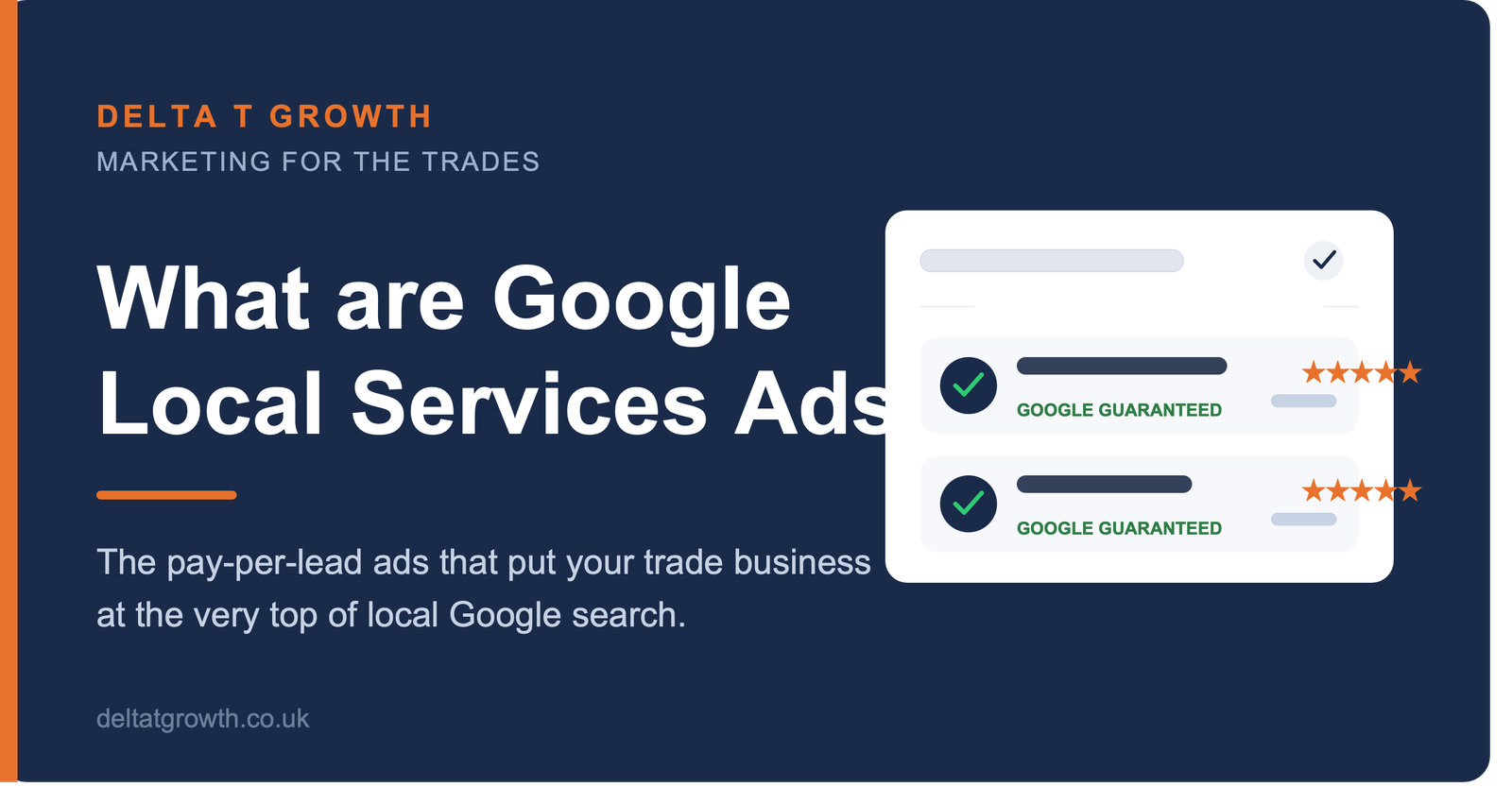
When a homeowner's boiler packs in on a cold Tuesday morning, they don't scroll through leaflets or ask a neighbour - they grab their phone and search "emergency plumber near me." The businesses that appear at the very top of that results page, before the paid ads and before the map listings, are running Google Local Services Ads. If you're not one of them, you're handing those jobs to a competitor.
How Google Local Services Ads are different
Most digital advertising charges you every time someone clicks your ad, whether or not they ever pick up the phone. Google Local Services Ads (LSAs) work differently: you only pay when a customer actually contacts you, by calling, messaging, or submitting a booking request directly from the ad. That's a pay-per-lead model, not pay-per-click, which means your budget goes on real enquiries rather than tyre-kickers.
The ads themselves appear in a strip right at the top of the Google search results page, above both the regular paid ads and the organic listings. On mobile, where the vast majority of emergency trade searches happen, that prime position is everything. A customer sees your business name, your star rating, how many reviews you have, and a phone number they can tap to call you instantly.
The Google Verified badge
To run LSAs, Google requires you to pass a verification process before your ads go live. You'll need to confirm your business details, provide proof of relevant trade qualifications or licences, show valid public liability insurance, and in the UK, be registered with Companies House or hold a VAT number. Google checks the lot.
Once verified, your ads display a Google Verified badge alongside your listing. This replaced the old "Google Guaranteed" label in October 2025, but the principle is the same: it tells customers that Google has vetted you. For a homeowner choosing between three plumbers they've never heard of, that badge is a meaningful signal of trust.
Customers searching for an emergency plumber aren't shopping around, they want the first credible business they see. An LSA puts you there, verified and ready to call.
What does it cost?
According to Google, the average cost per lead for HVAC businesses in the UK is around £7.50. The exact figure you pay varies with your location and the competition in your area, but a genuine local enquiry for under a tenner is a different world from traditional advertising, especially for high ticket items like Boiler or AC Installation works.
£7.50Google's average cost per lead for HVAC businesses in the UK running Local Services Ads.
Compare that to traditional Google search ads, where you might pay £3–£8 per click and need many clicks before a customer actually calls. At a conversion rate of 30–40%, a traditional PPC lead can end up costing far more once you factor in all the clicks that never turned into a job. LSAs cut through that waste because you're charged for the contact, not the curiosity.
What kinds of jobs does it work for?
LSAs are particularly well-suited to urgent and emergency work, boiler breakdowns, burst pipes, no hot water, because those are high-intent searches where the customer needs someone now. But they also work well for planned jobs like boiler servicing, bathroom installs, and heating system upgrades, especially when your reviews and verification badge give you an edge over unverified competitors.
Google's LSA platform in the UK covers plumbing and heating engineers, along with a growing range of other trades including electricians, roofers, locksmiths, and drain specialists. If you're in one of these categories, you're eligible to apply today.
How do you get started?
You set up your LSA profile through Google's Local Services platform. You'll choose the services you offer, the areas you cover, and set a weekly budget, Google then manages bidding automatically to get you leads within that budget. The whole setup process takes a few hours, though the verification checks can take a week or two to complete.
Once you're live, your ranking within the ad strip is based on a mix of your budget, your proximity to the searcher, and the quality of your Google reviews. This means that actively collecting reviews from happy customers isn't just good for your reputation, it directly affects how often your LSA gets shown.
Are LSAs right for every plumbing and heating business?
If you're already fully booked and struggling to take on more work, LSAs probably aren't the priority right now. But if you want a predictable flow of new customer enquiries, with a clear cost attached to each one and a Google badge building trust before the customer even speaks to you, they're one of the most effective advertising tools available to trade businesses in the UK right now.
The businesses winning with LSAs aren't necessarily the biggest or the best-funded, they're the ones who got verified, kept their reviews ticking over, and showed up consistently. There's no reason that can't be you.
If you'd like help setting and maintaining Google Local Services Ads for your plumbing or heating business, or you want to know whether they're the right fit for where you are right now, book a free call and we'll talk it through.

Rob Davis, Founder of Delta T Growth
24 years at the top end of UK plumbing & heating, now Google-certified in digital marketing. Rob helps trade businesses get found, get trusted and get booked, without the agency jargon.